

Enriching the Educational Experience
UO Portland's adjunct and pro tem instructors are helping graduate students reach their full potential and achieve profound career success.
Meet the Instructors
Q&A
Student Experience
About the Programs
UO Portland's adjunct and pro tem instructors are helping graduate and upper-level undergraduate students reach their full potential and achieve profound career success.
By DAVE FISSE
As a campus with a warm community feel and deep connections across many key industries in the greater Portland metro area, the University of Oregon Portland draws from an incredible talent pool of accomplished professionals to teach in our graduate programs.
UO’s adjunct and Pro Tempore (Pro Tem) instructors are enriching the educational experience by bringing their wealth of real-world experience and deep insights into the classroom—and beyond.
Our world-class faculty serve a dual role as subject matter experts in their field and innovative educators in the classroom—bridging the gap between academic theory and practical application.
The deep relationships that they develop with their students extend well beyond the classroom. They often serve as trusted mentors—to guide young professionals along their new career paths and leadership journeys in the field.
Below is a sample of the types of professionals who work with our students. They share their experiences in the classroom and preparing students for their careers.
Meet the Instructors

Greg Hoffman is a global brand leader, former NIKE chief marketing officer, and founder of the brand advisory group Modern Arena. For more than 27 years, Hoffman held marketing, design, and innovation leadership roles at NIKE. He has been recognized for his transformative leadership in listings such as Fast Company's Most Creative People in Business, Business Insider's 50 Most Innovative CMOs, and AdAge's Branding Power Players.
During his time with the Nike Brand, he focused on themes of equality and empowerment through sport, driven by his role as a leader within the NIKE Black Employee Network and NIKE Foundation Board of Directors. Today he serves on the boards of Summit Impact and the Minneapolis College of Art and Design.

David Chen is a non-profit executive and general counsel working in healthcare and social services. As Pro Tem instructor, he brings 10+ years of demonstrated expertise overseeing complex commercial transactions, regulatory compliance, litigation, risk management, and employee relations issues for multi-faceted global organizations into the classroom.
Chen is the general counsel for Central City Concern, one of the local non-profits at the center of solving our city’s houselessness problem— helping people create meaningful, long-term change.
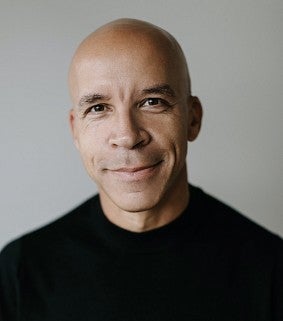
Greg Hoffman is a global brand leader, former NIKE chief marketing officer, and founder of the brand advisory group Modern Arena. For more than 27 years, Hoffman held marketing, design, and innovation leadership roles at NIKE. He has been recognized for his transformative leadership in listings such as Fast Company's Most Creative People in Business, Business Insider's 50 Most Innovative CMOs, and AdAge's Branding Power Players.
During his time with the Nike Brand, he focused on themes of equality and empowerment through sport, driven by his role as a leader within the NIKE Black Employee Network and NIKE Foundation Board of Directors. Today he serves on the boards of Summit Impact and the Minneapolis College of Art and Design.
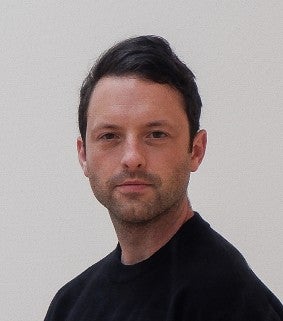
Will Smith received his Bachelor of Architecture from the University of Oregon (as well as his Master of Architecture from Harvard University where he graduated with distinction).
Smith is an innovative leader and true visionary in the program. Leveraging his own experience as a student who spent considerable time in the UO architecture studios, Smith brings a wealth of first-hand knowledge and a deeply immersive approach to teaching. His 2022 mass timber studio and 2023 terminal-thesis studio was wildly popular in attracting prospective students to the program.
Prior to joining Waechter Architecture as a project lead, Smith worked at multiple firms in Oregon, New York, and abroad, including PARA-Project, LEVER Architecture, Architecture Research Office, Allied Works, and HaasCookZemmrick.
What differentiates your program from the others across the landscape, which are enriching the educational experience for students?
Greg Hoffman
Our distinctive approach in the SPM (sports product management) program lies in the collaborative teaching model of our faculty, functioning as a cohesive team. Just as a successful brand is built through the seamless integration of diverse functions and expertise, our program mirrors this philosophy. In response to consumer preferences for holistic product experiences and brand relationships, our faculty operates in a similar fashion. We guide students through a connected journey, encompassing the conception of innovation, product creation, branding, and the strategic launch of the product into the market.
In our pursuit of shaping sports product concepts that unlock the full continuum of human potential, it's crucial to recognize that in the end, we're not merely selling a product; we're also conveying our purpose and promise.
Our educational approach empowers students to craft high-performance products that, in tandem, contribute positively to the world. We instill the understanding that what we offer extends beyond a tangible item—it embodies a commitment to making a meaningful impact in people and the world.
Will Smith
In the design world, as a student myself, I didn't necessarily know why to get excited about a certain design detail. Now, as a practitioner, I see all the ways to get excited and to find new opportunities into otherwise mundane things that now I get to share with students and relate back to bigger theoretical ideas at the same time.
So, I feel excitement for our graduate students, who are getting the theoretical, as well as the more detailed news at the same time. And when they graduate, they're going to be able to channel those theoretical ideas into their everyday. Kind of different from my own experience, where I kind of struggled for a while, asking, how do I take these lofty ideas and put them to work in my everyday profession.
Gail Baker
I have received feedback from my students that they value taking the time to think about what leadership really entails. This informs our focus—to explore and learn about leadership from their own perspectives and expand how they think about their career path.
Our program covers the nuts and bolts of management—things like setting goals, objectives, and measurements and holding a communication team accountable – while focusing on gaining the ability to show the impact that you and your team has within an organization.
We bring in other leaders in the communications field to share their professional experiences. To help students think about all the opportunities within the strategic communication practice. People who've led agencies, creative departments, and non-profits. This helps students explore on where they want to go as a leader.
David Chen
The joy of working with these extraordinarily bright law students is the opportunity to apply contemporary contextual framing into planned coursework. Projects and assignments become more meaningful to helping students understand the important role they will play in the community. Especially when there is a clear linkage between the coursework they are asked to complete, and an understanding of how similar projects have impacted the outcomes of the community around them.
Anytime students can gain exposure to real-world examples and use cases is a positive. We work on these types of real-world challenges, helping develop strategic thinking—not only at a systems level, but also the ability to apply strategic analysis to each individual project a student is asked to engage with.
Can you expand on the unique value that your program provides, which students can directly apply to their career path in the field?
Will Smith
I think that it can be difficult sometimes as a (graduate) student to know where the interesting problems—or the interesting opportunities—are in the world.
As a student, you often see the big picture issues and tend to gravitate towards it in a somewhat vague and all-encompassing way. Take climate change, for example. The tendency is to kind of want to attack that total problem. Whereas, what an adjunct professor—or someone who's in practice—can bring to their students is a more hyper-focused approach—to confront climate change out in practice.
Adjuncts can speak from direct experience, conveying the real critical points, where there are questions right now, or where we can examine this particular point in a design process or in a construction process. Adjuncts can convey to students: "I've been out in the world confronting the same problem, I'm equally interested in the solutions to the same problem, and right now these are the opportunities or problem points that you can dive into.
This gives the students a deeper assurance that what they're working on is potentially impactful—not just relevant—because other people are going to be interested to know what they find.
Greg Hoffman
We explore the blend of art and science that is inherent in branding, learning how to deliver both rational and emotional value in the customer's life. Our focus extends beyond merely communicating a product's functionality to encompass the emotional impact it imparts. We guide you in crafting brand associations that distinctly enhance the perception of your product. Recognizing that a brand's value is a constructed impression within the customer's mind, we explore intentional strategies to shape and influence those perceptions.
Gail Baker
We broaden the lens to think about yourself as a leader and what you value. So, we do some real introspection on what constitutes good leadership and how do you want to show up as a leader. Students have said that they really thought differently about their career, work-life balance, and where they want to go, as a result.
David Chen
I enjoy reminding students that for many individuals the idea of the “career path” is not as prescriptive as they are led to believe. My own career journey has led me on several twists and turns and successes and failures that may have felt like a nadir point at the time but turned out to be an opportunity for new skill development and change in career trajectory in hindsight.
That kind of curiosity and willingness to courageous say “yes” to unique and unorthodox opportunities takes time to develop, and I always try to encourage that development in the classroom setting.
Students are yearning to hear from their peers and their professors of circumstances that were formative to both their leadership and career story arcs. Often, professors appear to be a monolith of success moving from the private sector to a prestigious academic role; however, sharing with students how to apply skills learned in graduate school in instances of real uncertainty and self-doubt have been just as meaningful as sharing moments when it felt like everything was going to plan.

What are some of the critical skills that you prioritize in your course that graduate students should have to be competitive in their field?
Gail Baker
As a leader in communications, you’re leading more than just people. You’re leading the entire function within the organization—leading your team to successfully fulfill the business objectives of the organization. You do all this while influencing across an organization and demonstrating the value strategic communication delivers.
It’s important to develop an understanding of how you want to think about leading a world class communication team -beyond the fundamentals of setting goals and objectives, measuring what matters, and developing and motivating talent.
We dive in to a deeper understanding of the challenges and opportunities that leaders face in orgnizations of all types and sizes, including an appreciation for the unique aspects involved in leading strategic communication organizations.
We also look at how students can develop their own leadership philosophy and style, enabling them to articulate their own leadership agenda with confidence—and explore how they can have greater impact on their organization and communities.
Will Smith
What I found when I graduated—and what I continue to see with recent graduates, especially in design and architecture landscape is, the importance of being adept. Being able to represent ideas and narratives in many different forms is the critical path.
What a young professional can do is represent and communicate their own ideas and other people's ideas for them. That's kind of a way in and that's how you get to the table. For example, a more experienced and knowledgeable professional in the field may need help representing what they're trying to do. Students get to step in and be their hands. Draw for them, model for them—and next thing you know, you're submitting your ideas together. Then you’re guiding their ideas in your own directions.
Along the way, you've learned a lot of new ideas, new ways of working, absorbing a lot of that newfound knowledge. Then, you can become a decision-maker yourself. You know, a project director yourself, where you start guiding other people.
David Chen
Adaptability. Leaders needs to constantly stay in what is often called “the rookie mindset” and take strengths of experience and wisdom and partner it with a constant curiosity and openness to new ideas and techniques.
Organizations are looking for leaders that can demonstrate confidence when working through issues that are complex, mired in ambiguity, and require not only a mastery of technical expertise, but also the ability to balance values against competing priorities.
Law students that understand their role beyond review and revision of business agreements can provide greater value to their organizations. The role of the modern practicing attorney is one that must also consider the application of an organization’s values, understand the needs of other parties, look ahead to ensure they are seeing pitfalls and consequences of individual decisions on the larger enterprise.
Greg Hoffman
In my view, the essential skills include the following: First, being able to build a brand plan and strategy. Defining your brand’s mission, vision, values and positioning statement. Second, being able to drive the creation of a brand identity and the visual elements that define it, such as color, logo and logotype, typography, etc. Third, how to create a memorable brand name.
What our graduates are saying
The UO School of Law Portland Program was key to jump-starting my professional career. With the wide variety of job options that Portland has to offer, coupled with the flexible class times at the Portland campus, this program was exactly what I needed to make key professional connections in my third year. Both my first job out of law school and my current position were both possible because of connections that I made during my time at the Portland Program.
Class of 2020, School of Law Portland Program
The Sports Product Management program offered me a free ticket to meet with anyone in the industry. I had over 80 coffee chats during my 18-months in the program. This opportunity allowed me to learn about various roles, get feedback on my ideas, and finally launch my career in the industry.
Class of 2019, Sports Product Management, Lundquist College of Buisness